
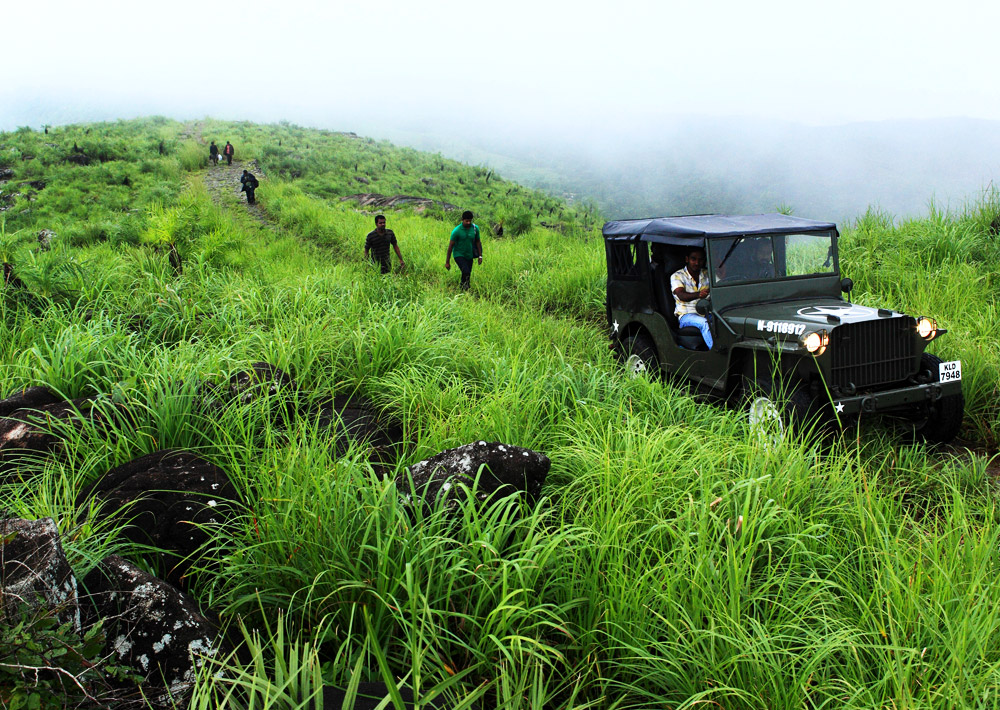
Kottayam district is famous for its rich heritage and literary tradition. It is renowned for its spice and rubber trade. Cradled by the backwaters and the Western Ghats, it is epitomised by its stretches of vast greenery, paddy fields and huge rubber plantations. Over five of the State’s leading newspaper publications originate from Kottayam. About four-fifth of books published in the State come from here as well. From trekking hotbeds like Nadukani and Kottathavalam to the rare avian life on display at the Kumarakom Bird Sanctuary, this district encompasses everything that God’s Own Country is famous for. Well connected to the entire State, it is full of interesting historical and cultural locations that tell the tale of how the district was forged into its current form.
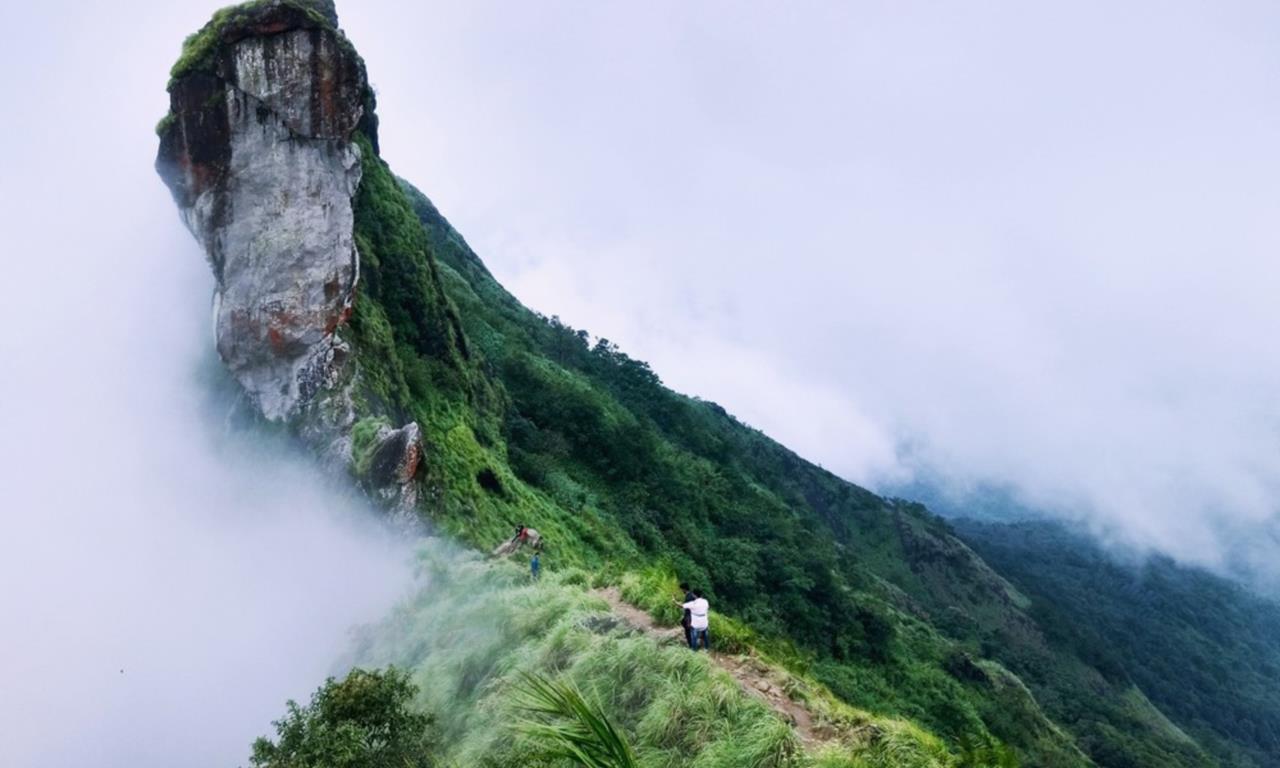
Illikkal Mala comprises three hills, each rising up to 3,400 ft above sea level. Each of the hills has a peculiar shape. One of them resembles a mushroom, which is why it is known as Kuda Kallu (umbrella-shaped rock). The second hill has a small hunch on the sides and is therefore referred to as Koonu Kallu (hunch back rock). There is a 1⁄2-foot-wide bridge called Narakapalam (bridge to hell) connecting these two hills.
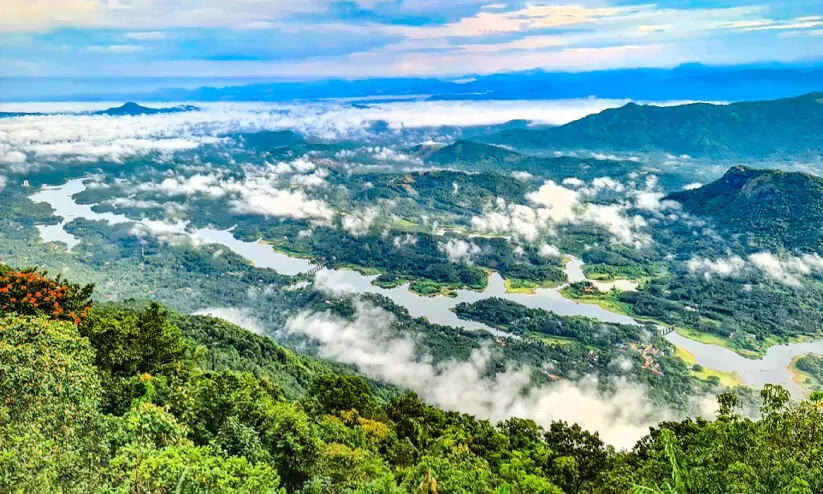
In a literal sense, Ilaveezhapoonchira means “the pond of flowers where the leaves do not fall”; Ilaveezha means “where the leaves do not fall” and poonchira means “pond”. There are no trees on these hills, so there are no leaves to fall and that’s how this place got its name. Ilaveezhapoonchira is located at a distance of about 75 kilometers away from Changanesserry, and along the Pala-Thodupuzha highway.
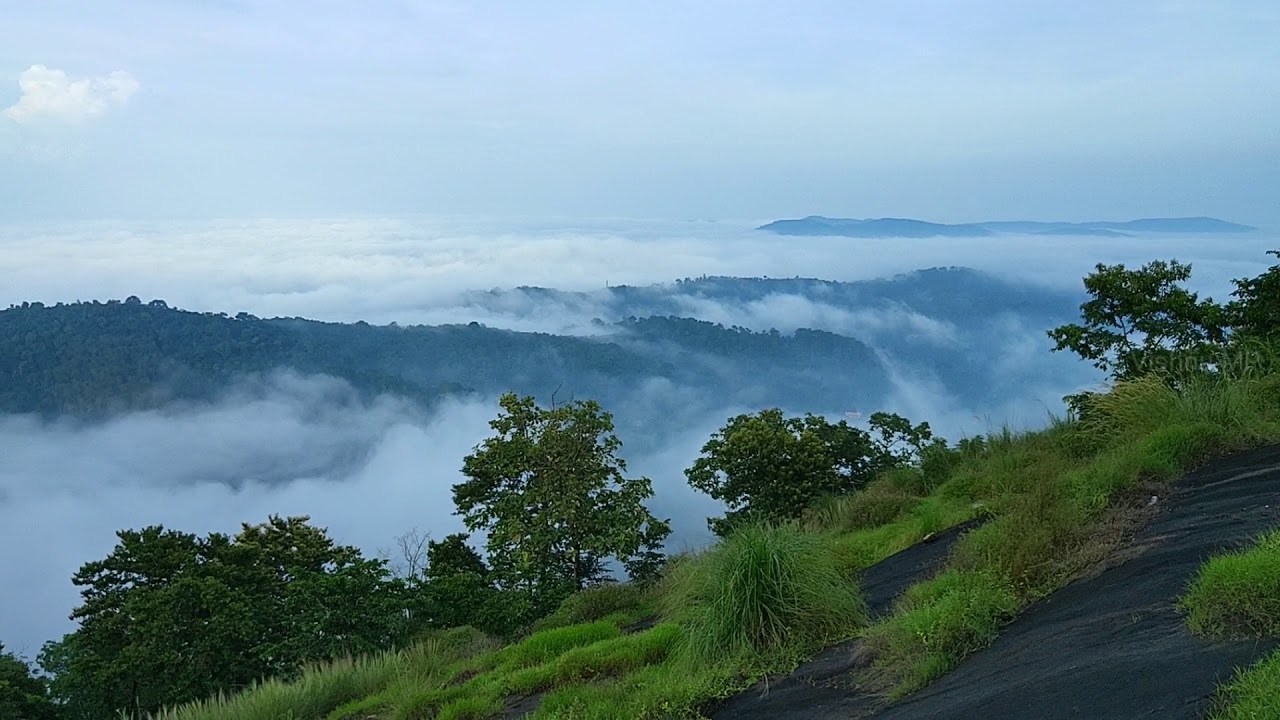
Nadukani is one such place nestled amid the wilderness of nature and densely wooded hills offering its visitors a beautiful trail for trekking. Lying at an altitude of 3000 ft above the sea level atop a hill, this place also affords a mesmerizing view of mountains on northern side and that of River Muvattupuzha.